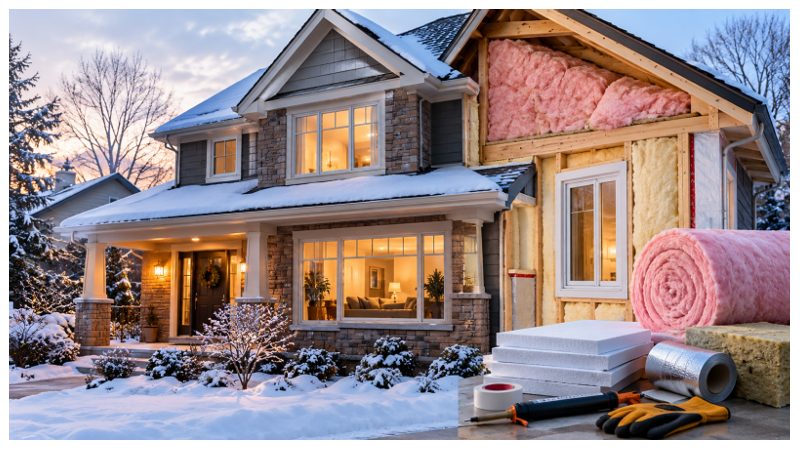
Early fall is a useful time for Ontario homeowners to prepare their homes for colder weather. Furnaces may not yet be running continuously, but cooler mornings and evenings can begin to reveal areas where the building envelope is underperforming.
The attic deserves particular attention. Because it separates heated living areas from the roof and outdoor conditions, problems with insulation coverage and air leakage can affect both comfort and heating efficiency. Checking attic insulation before sustained cold weather arrives gives homeowners an opportunity to identify potential weaknesses before they become more noticeable during winter.
1. Look for Changes in Comfort as Temperatures Fall
One of the simplest checks does not require entering the attic. Pay attention to how different rooms feel as outdoor temperatures begin to drop.
Upstairs rooms that cool much faster than the rest of the house can indicate a problem somewhere in the building envelope. Noticeable drafts, cold ceiling areas and large temperature differences between rooms may also deserve investigation.
These symptoms do not automatically mean insulation is the cause. Windows, exterior doors, heating-system performance and air leakage elsewhere in the house can produce similar effects. However, recurring comfort problems on the upper floor can provide a reason to examine attic conditions more closely.
Changes in heating patterns can offer another clue. If the heating system seems to run frequently while upper rooms still feel cool, heat may be escaping more quickly than expected. Identifying the cause early can make winter home preparation more useful than waiting until the coldest part of the season.
2. Check Insulation Coverage and Signs of Air Leakage
Homeowners who can safely view their attic from an access hatch may be able to make some basic observations without moving through the space. Attics can contain exposed electrical components, hidden joists and other hazards, so walking through an unfamiliar attic is best avoided without appropriate precautions.
From a safe viewing position, look at whether insulation appears evenly distributed. Areas where insulation is noticeably thin, compressed, disturbed or missing can reduce thermal performance. Previous electrical, ventilation or renovation work may also have displaced insulation.
Coverage is only part of the picture. Air leakage from the conditioned home into the attic can occur around plumbing and electrical penetrations, attic hatches, ceiling fixtures and other openings. This movement carries heat and, potentially, moisture into the attic.
Air sealing is therefore closely connected to insulation performance. Simply adding more material may not address an underlying leakage path. For better home energy efficiency, the thermal and air-control layers need to work together.
3. Pay Attention to Moisture and Attic Heat Loss
Moisture concerns should be investigated before an insulation upgrade is planned. Discoloured roof sheathing, damp insulation, staining or evidence of past condensation can indicate that the attic has experienced unwanted moisture.
There are several possible sources. Moist indoor air can leak upward from the living space, roof defects can allow water intrusion, and ventilation issues can affect how moisture behaves within the attic. The cause matters because adding insulation without addressing an existing moisture problem may leave the underlying issue unresolved.
Winter conditions can make these weaknesses more apparent. Warm indoor air moving into a cold attic can cool enough for moisture to condense on cold surfaces. Repeated wetting can affect insulation and other building materials.
Signs of attic heat loss may also become visible outside the home once snow arrives. Uneven snow melting across the roof can sometimes indicate variations in heat transfer, although roof orientation, sunlight and weather conditions can also influence melting patterns. It should be treated as a clue rather than a diagnosis.
4. Know When an Attic Assessment Makes Sense
Not every homeowner knows the history of their insulation. Older houses may have undergone several renovations, while newer properties can still have areas where insulation has been disturbed by later work. In some cases, it is difficult to determine the insulation depth, air-sealing condition or source of a moisture concern from the attic hatch alone.
A professional assessment can be worthwhile when warning signs are visible, comfort problems persist or existing conditions are uncertain. The appropriate solution depends on the current insulation, attic construction, air leakage, ventilation and any moisture concerns that need attention first.
For Ontario homeowners researching what an assessment or upgrade may involve, Reitzel Insulation provides information about roof and attic insulation and the factors that can affect attic performance.
An assessment can also help distinguish between a situation that requires additional insulation and one where air sealing or another building-envelope issue should be addressed first. That distinction matters because an effective insulation upgrade is about improving the performance of the complete assembly rather than simply increasing insulation depth.
5. Make Insulation Part of Seasonal Home Maintenance
Preparing a home for winter often involves checking the furnace, sealing obvious drafts, cleaning gutters and inspecting exterior components. Attic performance belongs on the same seasonal checklist.
The weeks before sustained cold weather provide an opportunity to observe insulation coverage, investigate known moisture problems and pay attention to changes in indoor comfort. Homeowners can also review whether previous renovations may have affected attic insulation or created new penetrations through the ceiling.
These checks support attic insulation Ontario homeowners can rely on as part of a broader building-envelope strategy. They can also help identify problems before winter conditions make rooms uncomfortable or place greater demand on the heating system.
No single improvement guarantees winter energy savings because every home’s construction and condition are different. Still, limiting unnecessary heat loss and uncontrolled air movement can reduce wasted heating energy while supporting more consistent indoor temperatures.
Ontario winters place significant demands on a home’s building envelope. Evaluating the attic before the heating season is fully underway gives homeowners time to understand its condition and address weaknesses in a planned way. The result is a home better prepared to manage cold temperatures, moisture and heating demands throughout the months ahead.